A reliable Grim Trials build combines a repeatable equipment core with persistent Skill Tree/Soul Rune choices and randomized Blessings that adapt the run. The released game supports scythes, axes and hammers as melee choices alongside the crossbow, while crafting, Mastercrafted progression, Gear Enchantment and post-launch balance changes all affect how a practical setup should be evaluated.
The four questions every build should answer
The official game description ties equipment, Skill Tree choices and randomized Blessings together. The released game adds enough progression detail that a useful build guide should answer four separate questions rather than presenting one screenshot and calling it a meta setup.
- What weapon pairing is the build using? Avelin combines a melee weapon with a crossbow, so the guide should explain both sides of the loadout rather than treating ranged damage as an afterthought.
- What gear makes the plan repeatable? Crafted equipment is part of persistent progression and should support the way the player actually creates safe damage windows.
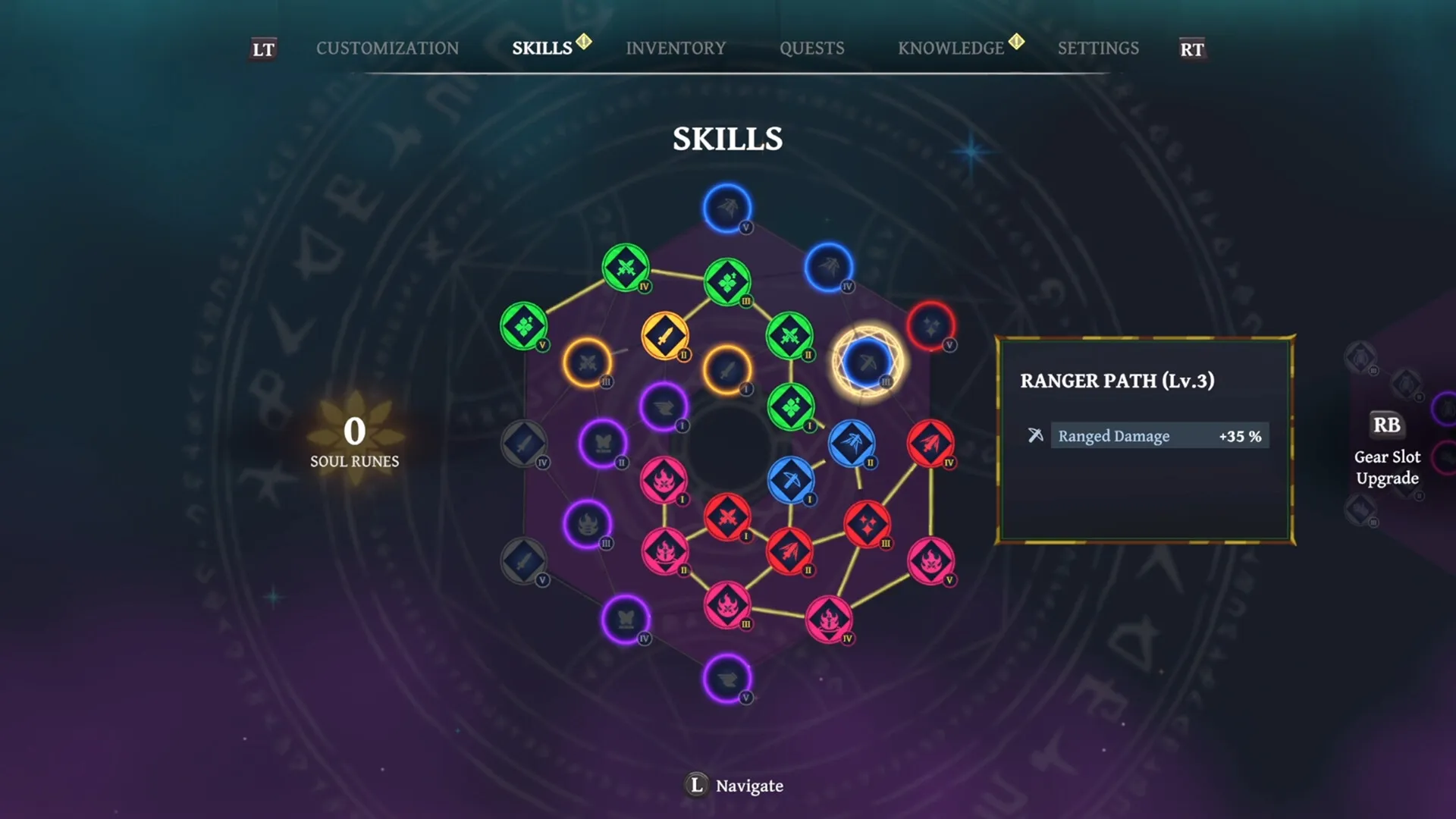
- What Skill Tree and Soul Rune investment is needed? These choices influence the baseline before the run starts and can be reassigned as progression changes.
- Which Blessings improve the plan when offered? Blessings are randomized, so a real build needs priority groups and alternatives instead of one perfect sequence.
Choose a weapon core before chasing Blessings
The current weapon structure is broader than the old pre-release scythe-and-crossbow framing. Official weapon-design material identifies scythe, axe and hammer as melee classes, with the crossbow providing the ranged/off-hand layer. The dedicated Weapon Database tracks what is currently verified without inventing unsupported item names or recipes.
Scythe-oriented builds
Scythes are the signature Reaper weapon and remain the easiest class around which to explain a balanced melee/ranged rhythm. A scythe build should ask how much time you can safely spend in melee, what the crossbow does while you are repositioning and whether your Skill Tree choices reward a flexible rather than all-in combat plan. See the Scythes Guide for current class-level planning.
Axe-oriented builds
Axes are a confirmed melee class, but they are also explicitly patch-sensitive because the developers said they were exploring an Axe revamp after launch. That was future-facing design discussion, not a shipped revamp. Axe build pages should therefore carry a verification date and avoid presenting a temporary balance impression as permanent. See the Axes Guide.
Hammer-oriented builds
Official developer material describes the hammer around high burst damage and repositioning before impact, while post-launch review coverage reports shorter reach with heavy contact damage. That supports a practical archetype: use the crossbow or movement to create a safe opening, then convert that opening into a committed melee punish. See the Hammers Guide.
Ranged-pressure builds
Crossbow-heavy play is viable enough that the developers specifically adjusted ranged combinations, ranged cooldowns and the Anubis Blessing in v1.0.20260824. Any ranged build copied from launch-week footage should therefore be treated cautiously. The Crossbows Guide and Anubis Guide contain the current patch context.
Skill Tree and Soul Runes are the persistent build layer
A strong build should function before the run gives you a lucky Blessing. That is where the Skill Tree and Soul Runes matter. Soul Runes feed persistent progression, can be reassigned, and interact with Skill Tree nodes and Slot Upgrades. Version v1.0.20260824 fixed both late-game Soul Rune acquisition and a refund issue when removing runes, so older reports about permanently disappearing runes are no longer reliable current-version advice.
Use the Skill Tree Guide for build planning and the Soul Runes Guide for earning, respec and patch details.
Blessings should improve a build, not define its only win condition
Blessings are the adaptive layer. They are selected during runs from Gods of Death and can push a build toward more damage, survivability, utility or another synergy. Because the choices are randomized, a build that collapses without one specific Blessing is a high-roll setup rather than a reliable baseline.
The site now maintains both an Omnitheism Guide and a verification-first Blessing Database. The latter intentionally does not invent English effect text for the full community-documented 24-entry checklist. Until current effect cards are captured, build advice should focus on verified interactions rather than mythology or translated labels.
Anubis shows why build guides need version numbers
The August 24 patch adjusted the Anubis Blessing in the same balance pass that changed ranged attack combinations and ranged weapon cooldowns. This makes Anubis the clearest example of why a build cannot be labeled “best” without a patch date.
Crafting, Mastercrafted quality and Gear Enchantment
Equipment progression does not stop when an item is crafted. The released achievement In Their Final Forms requires completing a Trial Ground with Level 3 Mastercrafted Weapon and Gears, proving that high-quality crafting matters to endgame progression. Gear Enchantment is a separate system accessed through the Skill Tree and received tutorial/quest clarification in v1.0.20260824.
For build planning, this means you should first decide whether a weapon and gear set actually fits your combat style, then invest in quality and upgrades. Upgrading an unfamiliar setup simply because a guide calls it “meta” is usually less efficient than strengthening a loadout you can execute consistently. Use the Crafting Progression Guide and Gear Enchantment Guide for the full route.
A build is only useful if it survives real encounters
Normal rooms and boss fights test different weaknesses. A setup that deletes ordinary enemies may still fail when a boss forces longer periods of movement, awkward approach angles or repeated punish windows. Conversely, a very safe boss setup can be unnecessarily slow in normal rooms.
The site therefore evaluates builds against the full combat loop rather than a training target alone. All seven Sin boss pages are now published through the Bosses Hub. Acedia also received a post-launch summoned-enemy rebalance, another reminder that encounter-specific build advice can change with patches.
Current evidence-supported build archetypes
| Archetype | Repeatable core | Random layer | Main risk |
|---|---|---|---|
| Balanced scythe | Flexible melee + crossbow coverage | Blessings that reinforce whichever side of the pairing is currently strongest | Becoming too general to excel at a specific boss problem |
| Hammer burst | Short-reach burst windows + ranged setup | Blessings that improve the actual punish loop | Overcommitting when the opening is too small |
| Axe adaptive | Axe + crossbow with conservative permanent investment | Flexible choices while future balance remains uncertain | Advice becoming stale if the explored Axe revamp ships |
| Ranged pressure | Crossbow uptime + melee fallback | Current-version ranged synergies | Using pre-v1.0.20260824 Anubis/cooldown advice |
What is the best build in Grim Trials?
There is not enough current public item-level evidence to publish one universal best build responsibly. The developers designed weapon classes around different playstyles, Blessings are randomized, and post-launch patches have already changed ranged balance and gear values. A useful ranking needs a narrower question such as safest boss-learning build, strongest repeatable ranged setup, easiest Mastercrafted completion setup or best low-execution beginner plan.
When the site eventually publishes named meta builds, each page should include the exact patch, equipment, Skill Tree/Soul Rune requirements, preferred Blessings, alternatives when the random choices do not appear, unlock requirements and boss-specific weaknesses.
Related build guides
Sources & verification
- Grim Trials on Steam — released-game equipment, Skill Tree, Blessing and persistent progression framework.
- Official Grim Trials Steam News — v1.0.20260824 and v1.0.20260829 balance context.
- Official weapon-design devlog — scythe, axe, hammer and crossbow design roles.
- Steam achievements — Mastercrafted and other released progression objectives.