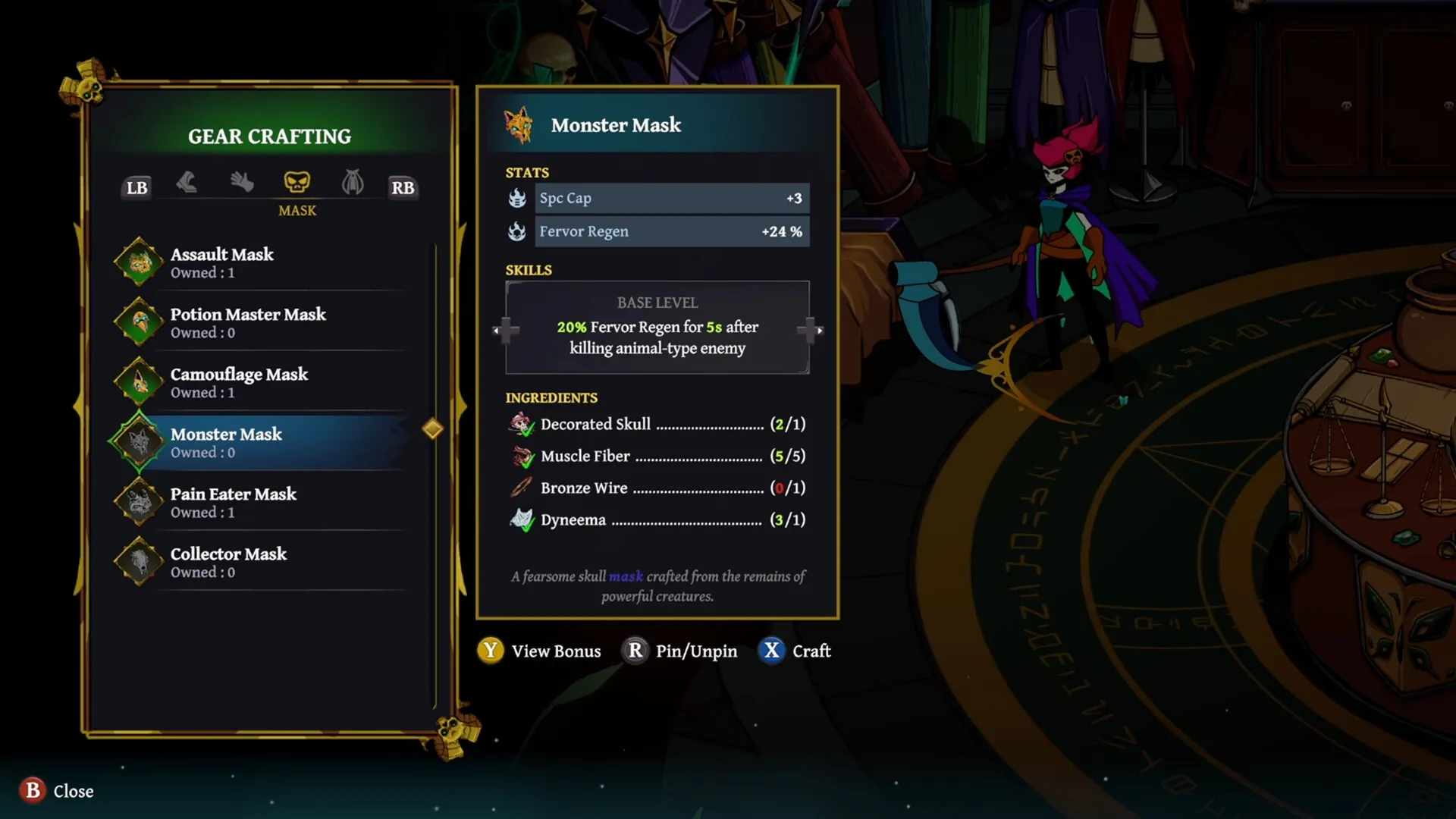
Crafting is one of Grim Trials’ main persistent progression systems, but it is only the first layer of equipment development. Materials from the Trial Grounds can be turned into weapons, gear and consumables, while Mastercrafted quality, Slot Upgrades and Gear Enchantment add separate progression layers around the equipment you decide to keep.
The current crafting loop
Grim Trials makes failed runs useful because experience and materials persist. The official store description says Avelin can bring materials back to the Academy and use mentors to craft weapons, armor and consumables. That gives crafting a clear role in long-term progression: a run does not need to end in a boss victory to improve your next attempt.
The released game also demonstrates that equipment progression extends beyond creating an item. The achievement In Their Final Forms asks for a Trial Ground clear with a Level 3 Mastercrafted Weapon and Gears, while the August 24 patch explicitly documents a separate Gear Enchantment quest/tutorial accessed through the Skill Tree. Treat these as connected but distinct systems.
Follow the full crafting progression route
The new Crafting Progression Guide connects the systems in the order most players actually need them: unlock recipes through Academy quests, craft one useful combat set, pursue Mastercrafted quality on equipment you intend to keep, unlock Gear Enchantment separately, then return for Fashionista, Weapon Connoisseur and the Level 3 Mastercrafted Trial Ground goal.
This distinction matters for efficient completion. Fashionista and Weapon Connoisseur measure collection, Mentor Makeover is quest-driven crafting, and In Their Final Forms measures high-quality endgame equipment in an actual Trial Ground run. Treating all four as one crafting requirement leads to unnecessary material spending.
What can you craft?
Weapons
Official descriptions confirm customizable melee and ranged equipment, with scythes and crossbows central to the dual-weapon combat loop. Craft toward the weapon rhythm you actually use rather than assuming the item with the largest visible number is automatically best.
Gear
Gear carries its own buffs and effects, and v1.0.20260824 adjusted several Gear values based on player performance. That means post-launch build recommendations should use current values rather than launch-week screenshots.
Consumables
Consumables remain part of the Academy crafting loop. Older Demo notes introduced potion limits and recipe adjustments, so exact quantities should always be checked against the current build.
Recipes and unlocks
Recipe availability and ingredient costs are separate questions. Academy side content can expand your crafting options, while the Crafting Recipe interface determines what you can currently make and what materials are required. Version v1.0.20260824 changed the recipe mini-game node layout, readability and navigation, so older screenshots can look different from the release version.
Open the Crafting Recipes Guide for the current evidence-first recipe framework.
Mastercrafted quality
Post-launch trophy documentation describes Mastercrafted as the high-quality result of the crafting interaction and notes that unsuccessful attempts can be reforged. The achievement In Their Final Forms is the strongest released-game confirmation that Mastercrafted quality matters beyond ordinary crafting: it specifically requires Level 3 Mastercrafted Weapon and Gears for a completed Trial Ground run.
Do not collapse this into Gear Enchantment. Mastercrafted is tied to crafting quality; Gear Enchantment is a separate feature reached through the Skill Tree. A completion checklist should track both independently.
Gear Enchantment
The official v1.0.20260824 patch improved the Gear Enchantment quest and tutorial flow and added clearer terms explaining how players access the feature through the Skill Tree. This is now one of the most important post-launch corrections to the old crafting hub because the original page did not account for this release-version progression layer.
If you are looking for the feature, do not search only at the crafting station. Follow the progression quest and check the Skills/Skill Tree interface. For the full distinction between crafting, Mastercrafted quality, Slot Upgrades and enchanting, use the Gear Enchantment Guide.
Crafting achievements and 100% goals
The current achievement list provides four useful milestones. Fashionista requires all Gear to be crafted, Weapon Connoisseur requires all Weapons, Mentor Makeover asks for a new gear set for John with Milyun, and In Their Final Forms requires a Level 3 Mastercrafted Weapon and Gears in a completed Trial Ground run.
A current third-party trophy guide reports 32 gear pieces and 7 weapons for the two collection achievements. Those counts are useful post-launch routing data, but the platform achievement descriptions do not themselves state those totals, so they should be rechecked if the item catalog changes.
How to prioritize materials
- Craft toward a build before a collection. A weapon and gear set that supports your actual playstyle has more immediate value than completion-only crafting.
- Unlock recipes before dedicated farming. Missing Academy progression can be more important than missing materials.
- Keep Mastercrafted goals separate from Enchantment goals. Both strengthen equipment progression, but they are not the same requirement.
- Re-check old ingredient tables. Recipe balance and Gear values have already changed, so stale counts can waste materials.
- Combine goals. Work on quests, Affinity and Trial Ground practice while gathering crafting resources.
Crafting for Trial Ground challenges
Trial Ground completion makes the value of equipment quality easy to measure. The Untouchable rewards a run completed without taking damage, so consistent movement and safe damage matter more than theoretical peak damage. In Their Final Forms directly requires Level 3 Mastercrafted equipment, making it the clearest endgame crafting objective in the achievement list.
The efficient path is usually to choose equipment you already understand, improve its quality, align Skill Tree and Slot Upgrade choices with that set, then practice the run rather than constantly swapping to unfamiliar gear.
Crafting FAQ
Is Gear Enchantment part of crafting?
It belongs to equipment progression but is a separate feature. The official patch says it is accessed through the Skill Tree and has its own quest/tutorial.
Is Mastercrafted the same as enchanted?
No. Mastercrafted refers to crafting quality, while Gear Enchantment is a separate upgrade system.
Did crafting change after release?
Yes. Version v1.0.20260824 fixed a bug that could prevent Crafting from producing an item and improved recipe layout, readability and navigation. The same patch also adjusted multiple Gear values.
What is the best endgame crafting target?
For achievement-focused players, a Level 3 Mastercrafted Weapon and Gears are directly required by In Their Final Forms. Your best practical set should still match your preferred combat style.
Related guides
Sources & verification
- Grim Trials on Steam — current crafting and persistent progression framework.
- Official Grim Trials Steam News — v1.0.20260824 Crafting fix, recipe QoL, Gear Enchantment tutorial and Gear balance changes.
- Steam achievements — released completion goals tied to crafting and progression.
- Gamerbase post-launch trophy guide — supporting player-tested Mastercrafted and collection information.