Gula is one of the seven Sinful Soul bosses in Grim Trials, and defeating Gula unlocks the Virtue of Temperance achievement or trophy. Public post-launch sources confirm the boss identity and story-related achievement, but they do not yet provide a reliable official move-by-move Gula moveset. The safest current guide is therefore to prepare a coherent dual-weapon build, preserve movement space, use the crossbow whenever melee access is uncertain, and learn the encounter’s telegraphs before extending your punish windows.

Who is Gula in Grim Trials?
Gula is a named Sinful Soul boss in the released game. Steam’s achievement data confirms the pairing directly: Virtue of Temperance is awarded for beating Gula. The same objective appears in the Xbox achievement and PlayStation trophy sets, which makes the boss name and completion condition unusually easy to verify even though detailed public strategy documentation remains limited.
The official store description says Grim Trials contains seven sacrilegious bosses inside its hex-grid Trial Grounds. Those encounters are part of Avelin’s larger journey through the afterlife, where she fights impure souls while developing her equipment, Skill Tree and Blessing combinations. Gula should therefore be approached as part of a run rather than as an isolated action-game duel: the quality of your preparation before the boss room matters.
How to prepare for Gula
Start with a build that can deal damage at more than one distance. Grim Trials is designed around complementary melee and ranged tools. Your melee weapon provides strong commitment when a safe opening appears, while the crossbow lets you keep pressure on a target when staying close would force unnecessary risk. This is especially useful during an unfamiliar boss encounter because your first objective is not to maximize theoretical damage per second; it is to see enough of the fight to understand what is safe.
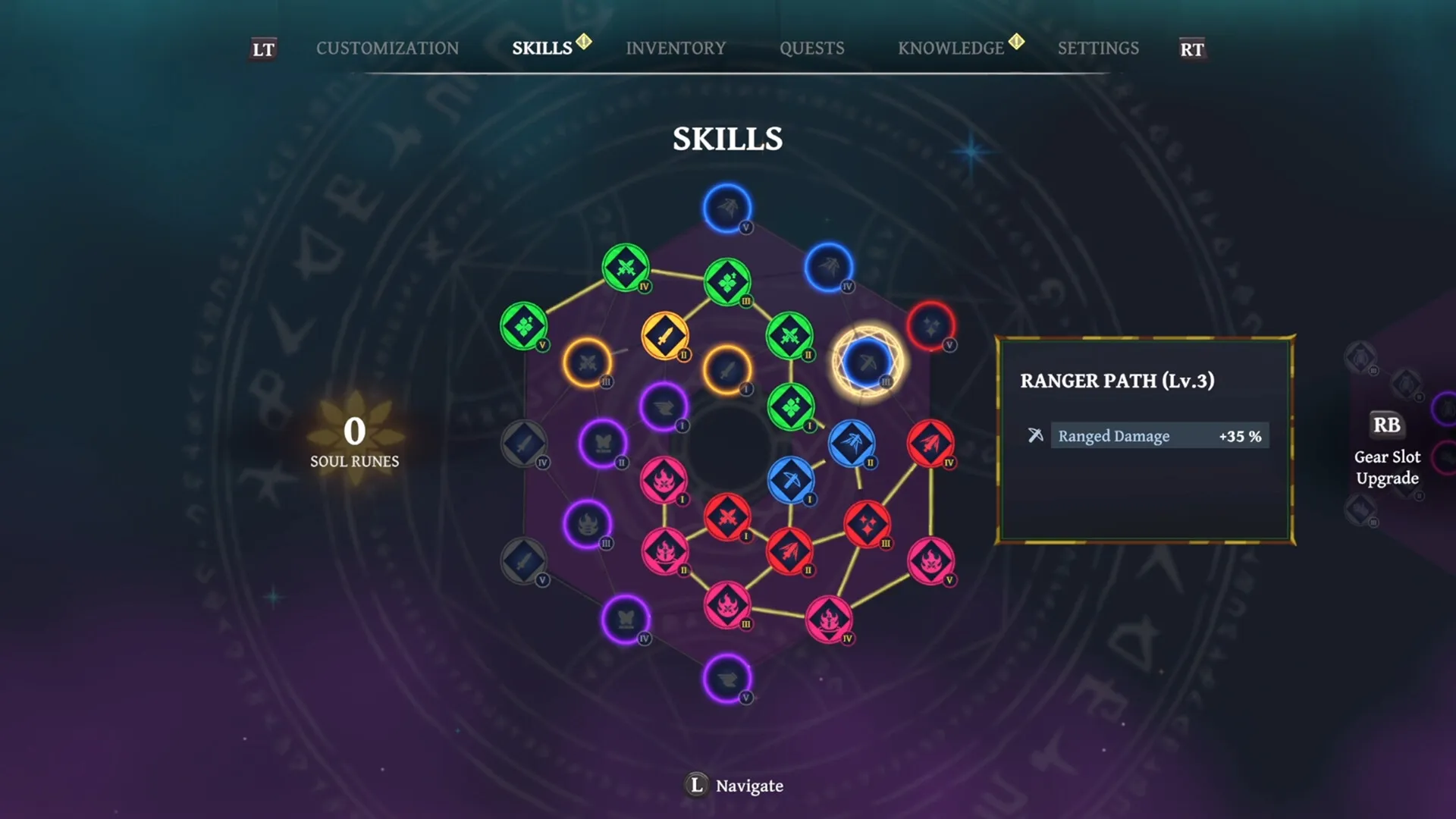
Before entering the boss room, check whether your Skill Tree choices, crafted equipment and acquired Blessings support the same general plan. A collection of individually strong bonuses is less useful than a build with a clear rhythm. If your melee setup rewards aggressive punish windows, make sure you still have a ranged fallback. If your run has developed around crossbow pressure, remember that the August 24 post-launch balance update adjusted ranged combinations and ranged weapon cooldowns, so pre-patch footage should not be treated as a current damage benchmark.
Evidence-first Gula strategy
Spend the opening moments reading the encounter. Do not immediately commit to your longest melee sequence. Establish the arena boundaries, watch how Gula closes distance or controls space, and identify the visual cue that precedes each dangerous action. Grim Trials rewards repeated attempts, and losing a little early damage is preferable to losing a run because you assumed an unverified attack window.
Keep an escape lane available. The game uses hex-grid arenas with enemies, traps and other sources of pressure. A dodge is much less useful if it ends against an obstacle or into another threat. The v1.0.20260829 update reduced several Trial Ground obstacles that could interrupt dashes, but positioning remains important. Try to move with a destination rather than repeatedly dodging on reaction without checking where you will land.
Use ranged pressure during uncertain windows. The crossbow is valuable because it lets you continue contributing while waiting for a cleaner melee opening. That does not mean every ranged build is automatically safer or stronger. Cooldowns and Blessing interactions have already received post-launch balance changes. Treat ranged attacks as a way to preserve tempo rather than a reason to ignore positioning.
Use short melee confirms before long commitments. When you first recognize a recovery window, test it with a shorter sequence. If Gula remains vulnerable long enough, extend the punish on later repetitions. This approach is slower than copying a supposed combo from an unverified guide, but it is much more robust when exact current-version frame data and phase thresholds are not publicly documented.
Gula first-clear decision tree
- If you cannot identify the next telegraph: stay mobile and use low-commitment crossbow pressure instead of starting your longest melee string just because Gula is in range.
- If the same recovery window has appeared more than once: test one short melee confirm, then exit. Do not assume the entire idle animation is safe.
- If your next dodge would end at the arena edge: re-center before chasing damage. One extra hit is not worth losing the next escape lane.
- If your run has strong randomized Blessings: use them to support the safe loop you already understand instead of changing your whole rhythm to force one synergy.
This decision tree is intentionally mechanics-agnostic where public evidence is weak. It gives a repeatable way to turn each failed attempt into information instead of pretending an unsupported weakness or phase script is known.
Dodging and melee telegraphs
The August 29 patch is relevant to every current boss guide because the developers adjusted melee attack telegraphing and behavior, particularly attacks that appeared to keep tracking after a player had already dodged. That change does not tell us a unique Gula attack list, but it does mean older footage may not perfectly represent the current feel of dodging melee pressure.
For practical play, avoid treating the dash button as a panic reset. Watch the attacker, move away from the threatened space, and try to finish the dodge somewhere that preserves your next option. Good positioning creates offense: when you end a defensive action at a useful angle and distance, you can immediately answer with a crossbow shot or a short melee punish instead of spending additional time escaping the edge of the arena.
What build should you use against Gula?
There is not enough verified public evidence to name one universal “best Gula build.” Grim Trials intentionally combines persistent progression with randomized run power. Crafted equipment, Soul Runes and Skill Tree choices shape the build you bring into a Trial, while Blessings can change the direction of the run after it begins. Two successful Gula attempts may therefore arrive with substantially different toolkits.
| Build need | Why it matters |
|---|---|
| Reliable melee option | Converts clearly recognized recovery windows into meaningful damage. |
| Crossbow pressure | Keeps the fight moving when staying in melee range is unsafe. |
| Movement comfort | Helps you learn patterns without spending every defensive action in panic. |
| Coherent Skill Tree | Supports the weapon rhythm you actually use instead of spreading upgrades randomly. |
| Useful Blessing synergy | Improves the run without requiring one specific unverified boss-only combination. |
Common mistakes when learning Gula
- Trying to speed-kill the boss on the first attempt. Pattern knowledge is more valuable than a few seconds of early damage.
- Using only melee. The crossbow exists to keep pressure when proximity is a bad trade.
- Dodging without checking the destination. Arena control matters as much as the initial evade.
- Copying old ranged footage as a current build tier list. Ranged combinations and cooldowns were adjusted after release.
- Inventing a phase trigger from one video. Unless a current source verifies a health threshold, treat visible transitions as observations rather than fixed percentages.
Virtue of Temperance achievement
The completion objective is straightforward: beat Gula. Steam’s released achievement list names Virtue of Temperance and gives that exact requirement, while XboxAchievements and TrueTrophies independently show the same boss objective. A post-launch trophy guide also marks the Gula trophy as story-related and effectively unmissable through normal story progression. That supports using the achievement as a reliable boss identity marker, but it does not establish hidden rewards, exact boss order details or a particular strategy.
Is there a good Gula boss video?
As of the verification date, searches for a focused current-version Gula boss guide did not surface a video strong enough to embed as a step-by-step reference. A generic Grim Trials trailer would add little to a page specifically answering “how to beat Gula,” so no video is embedded merely to fill space. This page can be updated when a clearly identifiable full-release Gula fight provides useful mechanical evidence.
Gula FAQ
What achievement do you get for beating Gula?
Defeating Gula unlocks Virtue of Temperance.
Is Gula one of the seven Grim Trials bosses?
Yes. Gula is one of the seven named Sinful Soul bosses confirmed by the released achievement and trophy sets.
What is Gula weak to?
No specific elemental, weapon or Blessing weakness is listed here because a reliable current-version source has not verified one. Use the build that gives you consistent safe damage rather than treating an unsupported weakness claim as fact.
Should I use melee or crossbow against Gula?
Use both roles when your build allows it: melee for recognized punish windows and crossbow pressure when closing distance is unsafe. That matches Grim Trials’ core dual-weapon design.
Related guides
Sources & verification
- Grim Trials on Steam — official seven-boss count, dual-weapon combat, Trial Grounds and progression systems.
- Steam achievements — Virtue of Temperance: Beat Gula.
- XboxAchievements — independent released achievement listing for Gula.
- TrueTrophies — PlayStation trophy list confirming Virtue of Temperance.
- Gamerbase trophy guide — supplementary post-launch evidence that the Gula trophy is story-related.