The Grim Trials Skill Tree is Avelin's persistent build-progression system. Souls earned through the Trial Grounds feed into Soul Rune progression, and Soul Runes can be socketed into Skill Tree nodes to unlock passive bonuses and combat abilities. The full release also includes separate Slot Upgrade nodes, while the August 24 patch confirms that removed Soul Runes are supposed to be refunded instead of lost.
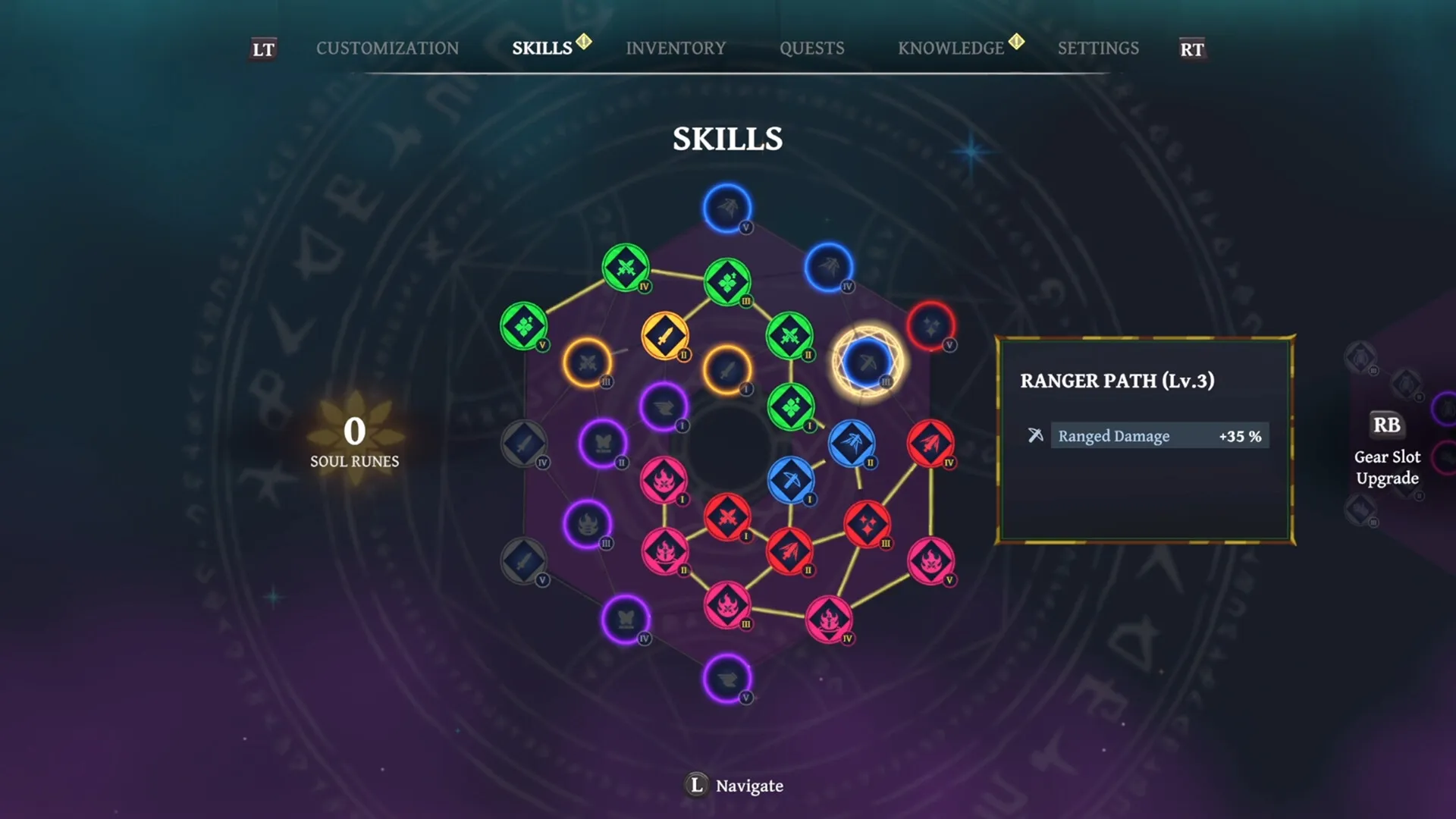
How the Grim Trials Skill Tree works
The released game ties permanent progression to the souls Avelin brings back from the Trial Grounds. A post-launch playthrough review describes souls as the experience-like resource that eventually awards Soul Runes. Those runes are then placed into the Skill Tree to activate nodes.
The tree is not limited to raw stat boosts. Public post-launch reporting confirms passive effects such as attack speed, movement speed and maximum HP alongside active combo abilities. That makes the tree the stable foundation of a build: equipment is prepared before a run, Skill Tree choices define your baseline, and randomized Blessings modify that plan once the run is underway.
What are Soul Runes?
Soul Runes are the resource used to activate Skill Tree progression. You gain progression by completing runs and collecting souls, while some quests can also reward Soul Runes. Because questlines unlock useful progression features in addition to gear and other rewards, talking to Academy NPCs is worth doing instead of repeatedly entering the Trials without checking the hub.
Most importantly, Soul Runes are not a one-way commitment. The August 24 official patch specifically fixed a bug where Soul Runes removed from the Skill Tree could disappear rather than being refunded. That confirms that removing a rune is an intended part of the system and that experimenting with different routes should not permanently consume the rune.
Skill Tree vs. Slot Upgrade nodes
The release achievement Maximum Occupancy 120 requires players to activate all Skill Tree and Slot Upgrade nodes. This is useful confirmation that full progression is broader than the central combat tree alone.
Public trophy-guide documentation describes Slot Upgrades as another rune-based progression layer accessible from the Skills interface. These upgrades are associated with equipment slots rather than only Avelin's combat abilities, so players aiming at complete progression should plan for both sides of the system instead of spending every rune only on combat nodes.
| Progression layer | What it changes | Best use |
|---|---|---|
| Skill Tree | Passive stats and active combat abilities/combos | Define the core playstyle you want before entering a run |
| Slot Upgrades | Equipment-related upgrade slots | Strengthen the gear layer of your build and work toward full completion |
| Blessings | Randomized run-specific powers | Adapt the permanent build to what the run offers |
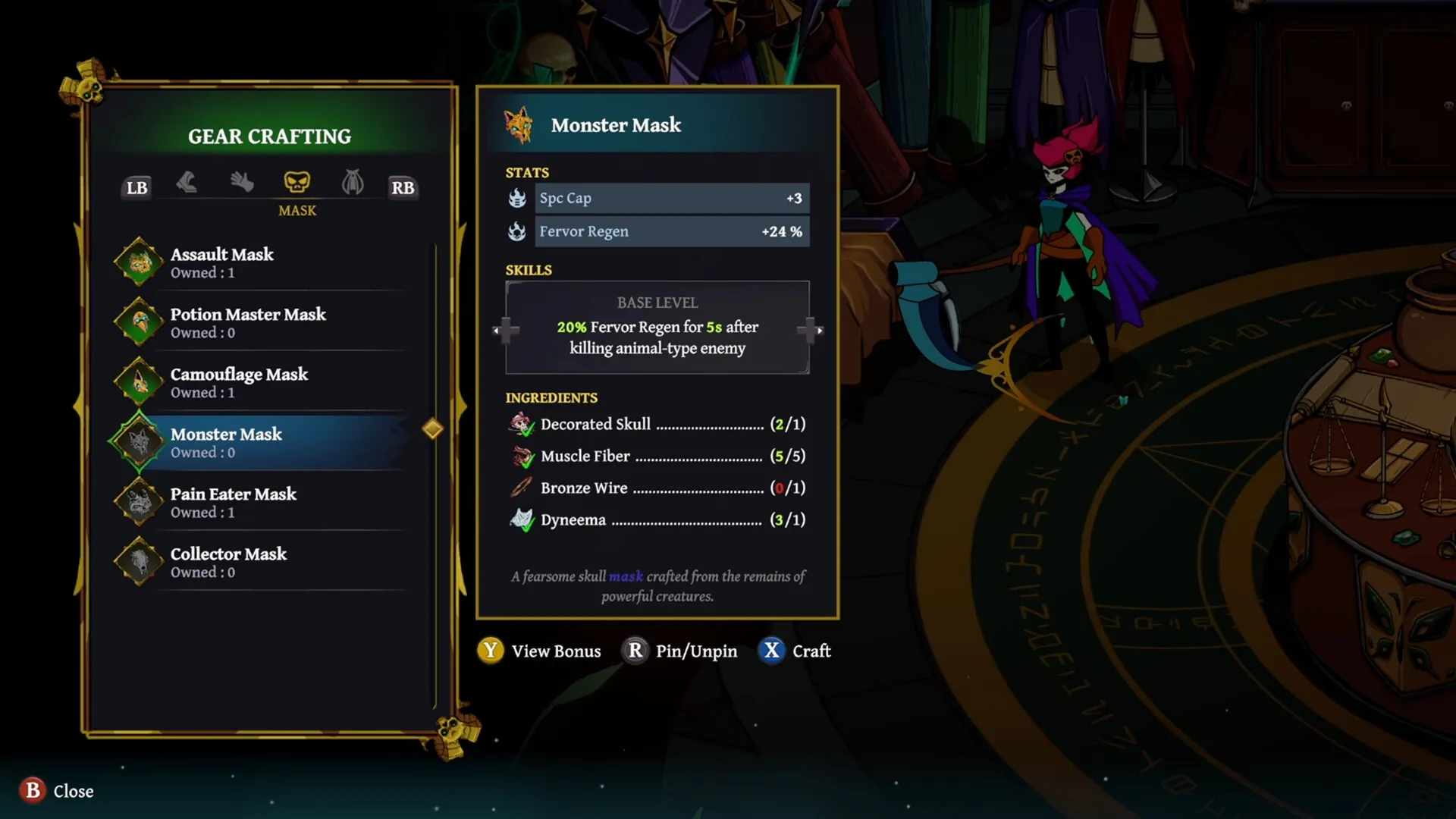
The Skill Tree also gates Gear Enchantment progression
The v1.0.20260824 patch improved the Gear Enchantment quest and tutorial and added clearer wording explaining how the feature is accessed through the Skill Tree. This matters because the Skill Tree is not just a damage screen: some broader progression systems are connected to it.
If Gear Enchantment seems unavailable, first progress the relevant Academy quest/tutorial and check the Skill Tree rather than assuming the crafting menu is bugged.
How to spend Soul Runes without wasting time
Because Soul Runes can be removed, the best approach is to build around what you actually use rather than trying to fill every branch immediately. A ranged-focused player should reinforce ranged pressure and survivability first; an aggressive melee player should prioritize nodes that improve close-range damage, movement and useful combo sequences.
- Choose a weapon plan first. Decide whether your current setup leans toward scythe pressure, ranged attacks or a balanced dual-weapon loop.
- Buy broadly useful survivability early. HP and movement-related improvements remain useful even when a run gives you awkward Blessings.
- Test active combo nodes in real rooms. A combo that looks strong in the menu is only valuable if you can execute it safely against normal enemies and bosses.
- Reconfigure when your gear changes. The refund behavior exists so you can move Soul Runes instead of keeping an outdated path forever.
- Do not ignore Slot Upgrades. They are part of full progression and interact with the equipment side of your build.
What happened to the old Attack Combo nodes?
The February 2026 demo expanded the Skill Tree with an Attack Combos branch. Older coverage named abilities such as Charge, Aftershock, Finisher, Clash, Momentum and Shadowstep. Those names are useful historical context, but this guide no longer treats every demo value or prerequisite as final-release data.
Post-launch reporting does confirm that active combo abilities remain part of the tree. Until we finish a node-by-node capture from the current release build, use this page for system-level progression and avoid relying on old demo percentages or costs.
How to fully complete the Skill Tree
The clearest completion marker is the Maximum Occupancy 120 achievement, which requires activating all Skill Tree and Slot Upgrade nodes. The achievement wording confirms the objective, but the title alone should not be interpreted as proof that the tree contains exactly 120 ordinary Skill Tree nodes.
For completion runs, keep doing Trial Ground runs for soul progression, finish side quests that reward runes, and invest in both Skill Tree and Slot Upgrade pages. You can later reorganize runes for a practical combat build after completing progression milestones.
Maximum Occupancy 120: practical completion route
The official requirement is simple: activate all Skill Tree and Slot Upgrade nodes. The detailed farming route below is player-tested release guidance, not an official developer farming recommendation.
- Finish normal progression first. Soul Runes come mainly from leveling and, to a lesser extent, side quests.
- Complete both progression pages. The achievement covers ordinary Skill Tree nodes and Slot Upgrade nodes, not one screen alone.
- Expect a late cleanup grind. The launch-version completion route reports being roughly 40 runes short even after most other objectives; that is a player-tested estimate and can vary by save.
- Use a fast clear setup. The same route recommends Replica I + Replica II and movement-speed gear for fast room clearing.
- Repeat the first Trial area. That route reports roughly 70–80 souls in about 2–3 minutes there, while later areas take longer for only a modest gain. Treat this as launch-version efficiency data and recheck after future balance changes.
For In Their Final Forms, the same post-launch route also reports that the equipment-side slots require 18 runes in total when filling three rune slots across the equipped gear categories. Treat that as player-tested completion guidance rather than official UI documentation.
Current Skill Tree patch status
| Version | Skill/progression change | Why it matters |
|---|---|---|
| v1.0.20260824 | Fixed late-game Soul Runes becoming unobtainable | Removes a progression blocker for affected saves |
| v1.0.20260824 | Fixed removed Soul Runes disappearing | Confirms rune removal should refund the resource |
| v1.0.20260824 | Clarified Gear Enchantment access through the Skill Tree | Makes an easily missed progression system easier to find |
| v1.0.20260829 | No new Skill Tree-specific change documented | Remains the current overall gameplay baseline while the August 24 Skill Tree fixes still apply |
Video
We searched specifically for a current Grim Trials Skill Tree or Soul Runes walkthrough. As of September 8, 2026, we did not find a sufficiently focused current-version YouTube guide worth embedding here. We will add one when a video demonstrates the released Skill Tree clearly rather than embedding an unrelated general trailer.
Related guides
Sources & verification
- Grim Trials on Steam — official description of Skill Tree investment, equipment and randomized Blessings.
- Grim Trials Steam Community announcements — official v1.0.20260824 Soul Rune, refund and Gear Enchantment fixes, plus the current v1.0.20260829 gameplay baseline.
- Steam achievements — confirms the Maximum Occupancy 120 requirement covering Skill Tree and Slot Upgrade nodes.
- Pink Fuzzy Bunnies post-launch review — documents the souls-to-Soul-Runes loop, socketing, removable runes, passive bonuses and active abilities from a completed playthrough.
- Gamerbase trophy guide — supplementary player-tested Skill Tree / Slot Upgrade documentation, rune farming estimates, Replica I/II recommendation and first-Trial efficiency.